Expanding Access to Veterinary Care in 2025
Veterinary and behavioral care services are essential to keeping animals healthy and families together, yet cost, geography and other barriers can put that care out of reach. Through our Community Veterinary Clinics in New York City, Los Angeles and Miami, mobile veterinary clinics and the ASPCA Animal Hospital in New York City, we provided accessible veterinary care ranging from vaccines, wellness services and spay/neuter surgeries to critical care for animals with life-threatening illnesses and injuries.
Veterinary Care in Action
Supporting Spay/Neuter Services Nationwide
Providing Poison Emergency Response 24/7
Training Tomorrow’s Veterinary Professionals Today
Opening Doors to Veterinary Telehealth
Veterinary Care in Action
109,000+
Animals cared for

129,000+
Spay/neuter surgeries supported

700+
Veterinary professionals and students engaged

334,000+
Animals supported during poison emergencies

Supporting Spay/Neuter Services Nationwide

The ASPCA supported more than 129,000 spay/neuter surgeries nationwide through direct programs, partnerships and funded clinics. The ASPCA Spay/Neuter Alliance in Asheville, North Carolina, welcomed its 200th clinic into the mentorship network, a milestone for a program that has helped expand access to high-quality, high-volume spay/neuter services across the country since 2004.
In Mississippi, the ASPCA and Oktibbeha County Humane Society opened a lifesaving animal support center designed to expand access to veterinary services and triple the local spay/neuter capacity. In Los Angeles, the ASPCA’s mobile spay/neuter services expanded access to affordable veterinary care by bringing free and discounted spay/neuter surgeries directly to communities with limited resources, helping reduce pet overpopulation and supporting pet owners across LA County.
Providing Poison Emergency Response 24/7

ASPCA Poison Control is a 24-hour resource for pet owners and veterinarians nationwide, offering customized, expert guidance on poisoning and potential toxic exposure emergencies from our unparalleled staff of nearly 200 veterinary professionals. Over the course of 2025, ASPCA Poison Control helped more than 334,000 animals with poisonous substance exposures involving pesticides, medications, plants, household products and other potentially hazardous items. ASPCA Poison Control handled its 5 millionth case (Lula: see her story below), a milestone that reflects nearly 50 years of veterinary toxicology expertise and the continued importance of rapid, evidence-informed support when animals may be exposed to dangerous substances.
Expert Support in Stressful Situations
When a few raisin cereal flakes fell on the floor and were quickly gobbled up by Lula, a food-motivated Chihuahua-mix, her worried family contacted ASPCA Poison Control because raisins can be toxic to dogs. Read Lula's story and how ASPCA Poison Control experts ensured she was okay.
Training Tomorrow’s Veterinary Professionals Today
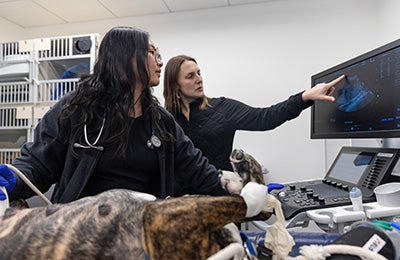
There are not enough veterinarians and veterinary technicians in the medical field today, and animals are suffering. To help strengthen the veterinary workforce and increase the availability of practical, evidence-based, quality veterinary care, the ASPCA taught more than 700 veterinarians, veterinary technicians and students in 2025.
In New York City, we launched a partnership with LaGuardia Community College’s Veterinary Technology program to provide students with hands-on training at the ASPCA Community Veterinary Clinic in Queens. The partnership is designed to increase the number of veterinary technicians graduating and entering the workforce in New York City while equipping them with practical, animal welfare-focused experience. Together, these investments in education and training are helping build a stronger, more sustainable veterinary workforce to serve animals and communities.
Our world-class toxicology experts at ASPCA Poison Control hosted 18 veterinary student externs and one pharmacy resident, published 16 articles in veterinary publications, presented four continuing education courses through ASPCA Learn and delivered 40 additional continuing education sessions to veterinary professionals nationwide.
Opening Doors to Veterinary Telehealth
The ASPCA continued to advocate for practical telehealth reforms to help more pets receive veterinary support. Access to telehealth can be especially critical in rural and under-resourced communities, where in-person care options may be limited. In 2025, following our work to advance legislation, Ohio enacted a law allowing veterinarians to establish veterinary-client-patient relationships through telehealth, while bipartisan legislation advanced in Michigan and Texas. This progress represents important steps toward removing barriers to care and helping animals stay healthier at home.