Advancing Animal Welfare and Strengthening Local Capacity
The ASPCA partners with shelters, rescues, veterinary providers, policymakers, farmers, food companies and communities nationwide to improve outcomes for animals and strengthen local systems of care. Through grantmaking, educational resources, data, research, relocation, advocacy and hands-on support, we help partners save and improve animals’ lives while building sustainable, community-based solutions for the future.
Empowering Animal Welfare Professionals
Advocating for Animals
Working Holistically to Help Farm Animals and Farmers
Protecting the Largest Companions, Too
Awarding Grants Nationwide
Providing Vital Resources in the Northern Tier
Using Data to Save Lives
Empowering Animal Welfare Professionals

ASPCA Pro, which provides training, research and resources to help animal welfare professionals, and ASPCA Learn, an online learning platform for professionals, continued equipping animal welfare professionals with tools, training and practical knowledge. In 2025, ASPCA Pro hosted a total of eight webinars with over 3,700 registrations. Participants completed 440 unique courses and over 2,500 hours of training, while more than 14,400 animal welfare professionals completed virtual courses designed to strengthen the knowledge and skills needed to support animals in shelters and communities.
The ASPCA Shelter Medicine Services team provided 84 virtual and on-site consultations to animal welfare organizations, serving nearly 190,000 animals across 34 states. Offered free of charge, these consultations helped shelter and veterinary professionals address a range of needs, including facility use and design, general medical health and wellbeing, infectious disease prevention and management, and more.
The ASPCA Learning Lab, which offers interactive, in-person and online learning experiences to advance behavioral healthcare for dogs and cats in animal shelters, reached over 3,000 learners from more than 300 animal welfare organizations. More than 50 professionals also received intensive training through the Learning Lab’s Core and Specialist Retreats and the Shelter Behavior Apprenticeship, the nation’s only hands-on, cost-free career training for shelter behavior professionals.
Advocating for Animals
The ASPCA advanced local, state and federal policy solutions to prevent cruelty, strengthen enforcement, expand access to veterinary care, reduce barriers for pet owners, improve disaster preparedness and protect animals nationwide. In 2025, more than 1.28 million advocates were part of the ASPCA’s advocacy community; 100,731 advocates took action, sending 260,513 messages to decision makers. Wins included new pet-friendly housing laws in Colorado, Washington, Nevada and Washington, D.C.; continued funding for the federal Pet and Women Safety Act, which provides funding to allow domestic violence shelters to accommodate pets; telehealth progress in multiple states; and laws in California closing loopholes in the state’s retail pet sales ban.
A Better Future for Animals: 2025’s Legislative Triumphs
Policy victories are more than milestones — they are reminders that advocacy works and persistence pays off. Read about the legislative victories in 2025.
Working Holistically to Help Farm Animals and Farmers
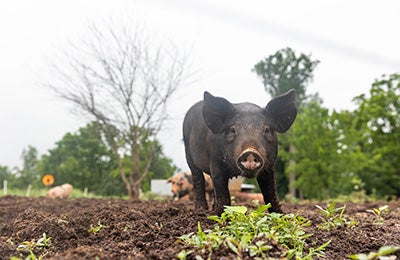
The ASPCA continued promoting a more humane food system by educating consumers, supporting reforms that improve farm animal welfare and helping farmers adopt sustainable, higher-welfare practices.
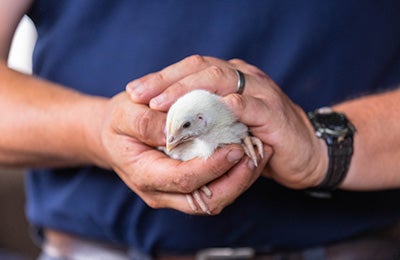
In 2025, the ASPCA celebrated and helped promote the debut of in-ovo sexing technology in the U.S. to help end the culling of male chicks in the egg industry. We also continued advancing work to increase the availability of healthier chicken breeds with higher-welfare genetics — chickens who do not suffer due to rapid and disproportionate growth. We also helped consumers make more informed purchasing decisions, recognizing the important role individual choices play in driving demand for higher-welfare food systems.
We also fought legislation on the federal level and in 15 states that would repeal laws banning the cruelest methods of confinement for farm animals. Through this work, we empowered advocates to take action by urging their lawmakers to oppose legislation designed to roll back protections for farm animals.
Protecting the Largest Companions, Too
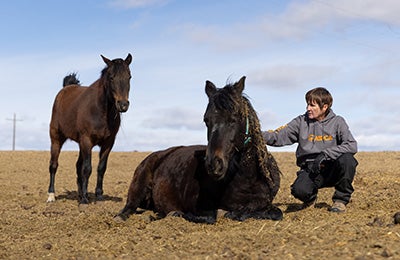
Horses are too often vulnerable to neglect, cruelty, risky transitions in ownership and a lack of accessible resources. Our equine welfare work supports adoption, safe placement, law enforcement training, legislative and regulatory advocacy, and stronger community-based solutions for horses in need. In 2025, the ASPCA hosted our second-annual equine-focused law enforcement training, helping professionals to better recognize and respond to equine cruelty and neglect. Through our equine adoption website, My Right Horse, the ASPCA generated 4,645 adoption inquiries and helped ASPCA Right Horse partners place more than 2,400 horses.
From Pennsylvania to Oklahoma for the Perfect Horse
Ten-year-old Eden M. and her parents found Eden’s dream horse — Rip Van Winkle, an American Quarter Horse — on My Right Horse. The family traveled for 18 hours to adopt Rip. Read about their journey and why they recommend equine adoption.
Awarding Grants Nationwide
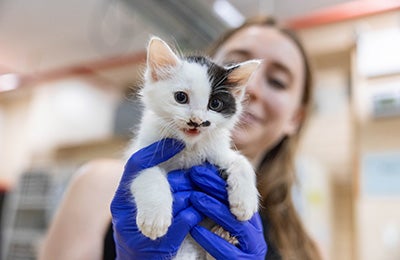
Grantmaking allows us to amplify the lifesaving work of shelter and rescue partners across the country. In 2025, the ASPCA awarded more than $29 million in grants to shelters, rescues, clinics, higher-welfare farmers and other entities supporting vulnerable animals in all 50 states. These investments helped expand access to veterinary care, strengthen emergency response, support adoption and placement, improve operations and advance animal welfare nationwide.
2025 Fund to End Factory Farming Grantees
For the fourth consecutive year, the ASPCA’s Fund to End Factory Farming provided grants for new ideas to expose and reduce factory farming and create more humane and sustainable food systems. One of our seven 2025 grant recipients was Cape Fear River Watch (CFRW) in North Carolina. Its mission is to protect and improve the water quality of the Cape Fear River Basin, which flows into the Atlantic Ocean. Our grant allowed CFRW to test, map and document the abundance of poultry litter pollution in North Carolina, and to pursue public education and oversight to protect communities and the water. Read about all the critical projects the Fund to End Factory Farming supported in 2025.
Providing Vital Resources in the Northern Tier

2025 marked 10 years of the ASPCA Northern Tier Shelter Initiative, which is dedicated to strengthening sheltering services and expanding spay/neuter capacity in under-resourced communities in Alaska, Washington, Idaho, Montana, North Dakota, Minnesota and Wisconsin. More than 145 organizations received grants and consultative support over the year. That includes grant funding to 17 organizations to expand shelter spay/neuter capacity, continuing our long-term commitment to building local infrastructure and improving outcomes for animals in the region.
In 2025, the ASPCA Learning Lab launched a new consultation program for Northern Tier shelters, providing online consultations, advising calls and remote learning to help organizations elevate animals’ behavioral wellbeing. In addition, we provided 89 scholarships for animal welfare professionals in the Northern Tier to attend a variety of conferences and other learning opportunities. This allowed recipients to access more resources, expand peer networks and receive guidance that focused on industry best practices and improving quality of life for animals.
Using Data to Save Lives

In December, the ASPCA finalized the acquisition of Shelter Animals Count to ensure the long-term sustainability of the animal sheltering field’s most trusted national database and reporting initiative. Shelter Animals Count is dedicated to collecting, analyzing and sharing animal sheltering data and is a transparent data resource that expands opportunities for analytics, research and evidence-based decision-making to save more lives. With reliable data, the ASPCA is helping shelters, rescues, policymakers and community partners better understand trends and target support where it’s needed.
- Home/Letter from CEO
- Ensuring Safe and Healthy Environments for Animals
- Expanding Access to Veterinary Care in 2025
- Protecting Animals from Cruelty and Mistreatment
- Advancing Animal Welfare and Strengthening Local Capacity