Ensuring Safe and Healthy Environments for Animals
Every animal deserves a safe environment that supports their physical health, emotional wellbeing and ability to thrive. In 2025, the ASPCA helped more than 70,000 animals find safe, loving homes through adoption, relocation and placement support; assisted more than 20,000 animals affected by disasters, emergencies and suspected cruelty; supported close to 1,000 shelters and rescue organizations with more than $23 million in grant funding; and helped provide more than 2 million meals to animals in need.
Transforming Animals with Complex Needs
Responding to Natural Disasters
Creating Brighter Futures Through Animal Relocation
Fighting to Protect Dogs in Puppy Mills
Promoting Pet Adoption as the First Option
Improving Outcomes for Pets in Los Angeles
Transforming Animals with Complex Needs
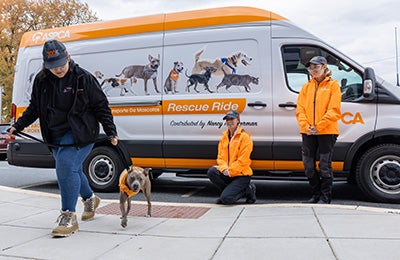
In December 2025, we opened the ASPCA Recovery & Rehabilitation Center in Pawling, New York, a facility dedicated to supporting dogs recovering from cruelty and neglect. The center expands our ability to provide integrated medical, behavioral and sheltering care for animals with complex needs, including many rescued through our longstanding partnership with the New York City Police Department (NYPD). From housing that reduces stress to veterinary and behavioral treatment spaces, the center gives vulnerable dogs the time, care and support they need to heal and move toward adoption.
From the Sidelines to Center of the Pack
We continued rehabilitating fearful, homeless dogs, many of whom were victims of cruelty or neglect, at the ASPCA Behavioral Rehabilitation Center in Weaverville, North Carolina. Our staff of behavior specialists expertly implemented science-based techniques to reduce fear and prepare dogs for placement in loving homes. One of those dogs was Kanga, a shy stray who transformed from a nervous observer watching people and dogs from a distance into a playful, confident companion. Read how Kanga found a new bounce in her step and a new home.
Responding to Natural Disasters
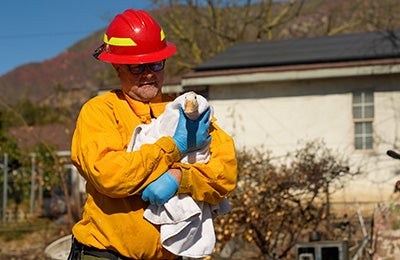
When disasters strike, animals and the people who love them need fast, coordinated support. In January, the ASPCA mobilized in response to the devastating Los Angeles wildfires, providing search and rescue, sheltering support, field operations, pet supply distribution and disaster expertise in collaboration with local and national partners. Together, these efforts assisted more than 900 animals in the aftermath of the Eaton and Palisades fires. Our support didn’t end with the immediate response — we also established a $5 million California Wildfire Response & Preparedness Fund to help meet the urgent needs of the local animal welfare community and build readiness for future emergencies.
Out of the Ashes, a Miraculous Reunion
When Georgia and Louise were forced to evacuate due to the Eaton fire, they feared they had lost their beloved cats. Working alongside local authorities and Pasadena Humane, ASPCA responders entered the evacuation zone, located all three cats and safely reunited them with Georgia and Louise. Their rescues highlight the ASPCA’s efforts to keep families and pets together during and after disasters. Read more about these incredible reunions.
Creating Brighter Futures Through Animal Relocation
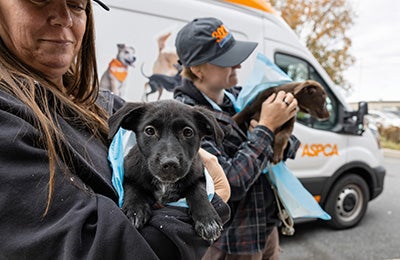
Animal relocation saves lives, especially when shelters are at capacity and local resources are limited. In 2025, ASPCA Animal Relocation safely relocated nearly 29,000 animals, reaching a milestone of transporting our 300,000th animal since the program’s inception. Working with more than 140 shelter partners nationwide, our program moves animals from areas with high populations of pet homelessness to communities where adoption opportunities are greater.
Maisie Belle’s Journey Marks a Historic ASPCA Milestone
For six years, the ASPCA’s Haley Herman has helped transport vulnerable shelter animals to communities where they have a better chance of being adopted. In October, she drove a special transport carrying the ASPCA’s 300,000th relocated animal, Maisie Belle — a three-legged dog who recovered from a severe injury — from Tennessee to Delaware. Read about Maisie Belle and Haley’s journey.
Fighting to Protect Dogs in Puppy Mills
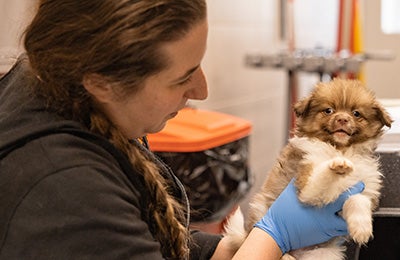
The ASPCA continued to challenge commercial breeding practices that put profit ahead of animal welfare. Through public education, legislative advocacy, legal action and efforts to hold licensed breeders accountable, we worked to expose cruel conditions, strengthen enforcement and reduce demand for puppy mill dogs. In 2025, Goldie’s Act (H.R. 349) was reintroduced in Congress to strengthen federal protections for dogs in federally licensed facilities. In October 2025, a federal court affirmed that the U.S. Department of Agriculture must always record violations on inspection reports, in response to a lawsuit filed by the ASPCA in 2021, rather than relying on “courtesy visits” that hide failures to comply with the law, Additionally, California enacted first-in-the-nation legislation that prohibits third-party pet brokers from selling puppies bred in mills to Californians, further shutting down the puppy mill pipeline into the state.
Promoting Pet Adoption as the First Option
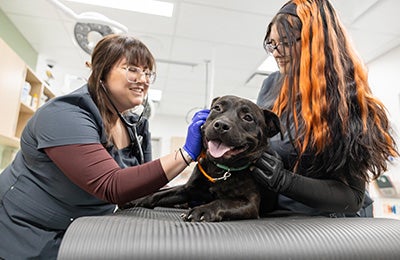
Encouraging pet adoption as the first choice for people looking to add an animal to their family remained a key focus in 2025. In its second year, The Rescue Effect, our national adoption campaign, engaged more than 600 shelters and rescue groups. Organizations received promotional resources, marketing assets and grant support. We awarded $2 million in grants to more than 100 participating organizations to help them waive adoption fees, support adoption efforts and offset operating costs.
“The Rescue Effect campaign didn't just reduce a fee; it created the perfect bridge between a dog who had been through so much and a family ready to give her the world.”
— Bill Coleman, executive director of the Outer Banks SPCA, Manteo, North Carolina
Improving Outcomes for Pets in Los Angeles
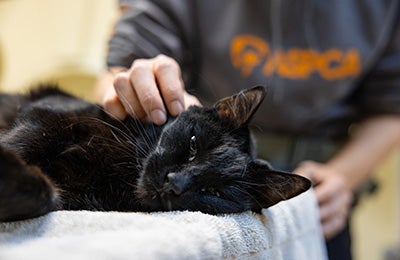
In Los Angeles, the ASPCA continued working with two of the largest municipal shelter systems in the country, providing grant funding and medical services to help animals on their way to adoption. In June, we co-sponsored the second-annual California Adopt-a-Pet Day and broadened the reach of adoption messaging. Survey results showed approximately 46% of participants who met their match during the event were first-time shelter adopters, with a total of 4,979 pet adoptions on that single day.
Our Los Angeles Kitten Foster Program provided lifesaving care for vulnerable cats and kittens too young or fragile to thrive in a shelter environment. Since 2015, the ASPCA has partnered with the County of Los Angeles Department of Animal Care and Control — Downey Animal Care Center to help vulnerable kittens. In 2025, the program assisted more than 1,200 cats and kittens, giving them the individualized care they needed to grow healthy and find loving families.
A Lifeline for Kittens in Need
While earning her degree at UCLA, Emma B. became known on campus as “The Cat Mom” for her dedication to fostering felines through the ASPCA Los Angeles Kitten Foster Program. Inspired by her childhood cat Ginger, who thrived despite medical challenges, Emma developed a passion for caring for animals with special needs. Find out why Emma continues to open her home to kittens in need and encourages others to foster.
- Home/Letter from CEO
- Ensuring Safe and Healthy Environments for Animals
- Expanding Access to Veterinary Care in 2025
- Protecting Animals from Cruelty and Mistreatment
- Advancing Animal Welfare and Strengthening Local Capacity