ASPCA® ShopKind™ has a list of farms and farmers markets recognized for selling more humanely raised food, but there may also be more humane farms near you that aren’t listed.* Here are some questions you can ask your local farmers to learn more about how they raise animals.
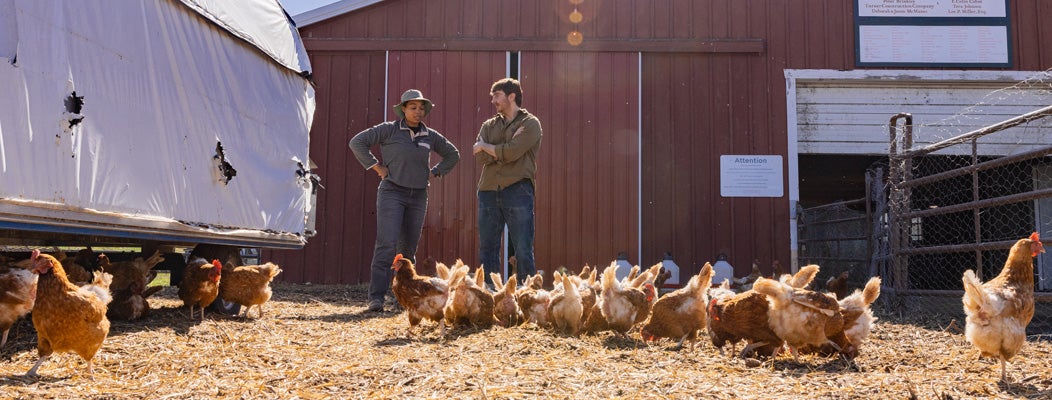
Questions To Ask To Identify More Humanely Raised Farm Products
Farmers and ranchers are usually happy to talk to customers about how they raise their animals. Here are four conversation-starting questions to help you identify humanely raised farm products and ensure that you’re not supporting factory farming:
- Ask: are animals raised outdoors on your farm?
- Ideally animals spend the majority of their lives on pasture or at least have daily access to a ranging area.
⚠️ Factory farms raise animals indoors in crowded, filthy conditions, sometimes immobilized by cages or ties, causing physical and psychological stress.
- If you’re buying pork, ask: Are pigs’ tails docked on your farm or are their teeth cut? If you’re buying eggs or turkey, ask: Are the tips of birds’ beaks cut off?
- When pigs, hens and turkeys have enough space, foraging material and low stress environments, painful physical alterations like tail-docking and beak trimming aren’t necessary.
⚠️ Animals housed in factory farms develop aggressive and abnormal behaviors like tail biting, fighting and cannibalism. Instead of providing animals with adequate space and materials, the routine practice on factory farms is to cut their tails, beaks and teeth. Usually, animals endure these excruciating procedures without pain relief.
- If you’re buying chicken, ask: what types of breeds do you raise?
- Cornish Cross breeds of chicken grow at an unnatural rate that negatively affects the bird’s health and welfare. We recommend buying chicken from farms that raise slower-growing breeds, and not the commonly-used Cornish Cross breed, as slower-growing breeds have better welfare outcomes.
⚠️ Most farms, whether they’re industrial or pasture-based, still raise Cornish Cross chickens, which have been bred to grow so rapidly that the birds suffer from poor mobility and higher rates of illness and injury, leading to poorer welfare outcomes compared to slower-growing breeds. On factory farms, the health and mobility issues faced by Cornish Cross birds are exacerbated as they’re crowded by the thousands in filthy, indoor barns.
- Ask: do you use antibiotics?
- A higher-welfare farm should practice responsible antibiotic use, meaning they only use antibiotics when individual animals are sick and need treatment.
⚠️ Factory farms use antibiotics routinely for whole flocks or herds to promote faster growth and as compensation for conditions that promote illness. This overuse of antibiotics has led to the growth of antibiotic-resistant “superbugs,” which have serious impacts on public health.
Further Resources on Finding Pasture-Raised Farm Products
There are a number of resources that aim to help shoppers find better food:
- Eatwild® focuses on pasture-based farming, and their site includes a state-by-state directory of farmers who meet Eatwild's criteria.
- The Food Animal Concerns Trust maintains a directory of farmers who have participated in their programming related to more humane pasture-based farming.
- The Good Meat Project’s Good Meat® Finder is a nationwide directory that seeks to locate farms, ranches, butcher shops, restaurants, and retailers that align with your standards.
* At this time, ASPCA ShopKind only lists farms with specific certifications that audit on-farm practices. If you own or operate a livestock farm and want to explore being listed on ASPCA ShopKind, email [email protected].