

This page contains links that lead to aspca.org/chewy. If you purchase any items through the affiliate links on that page, the ASPCA may receive a commission of 8% of your purchase at no additional cost to you. Thank you for your support!
With a new season comes new seasonal hazards, and to be honest, it can be challenging to keep track of each and every seasonal toxin when they change so quickly. Luckily, ASPCA Poison Control makes it easy with handy lists to help keep your pets safe! This fall, you can use the list of common seasonal plants below to better know which are hazardous to your four-legged friend, and which are okay to plant in your garden. Check it out!
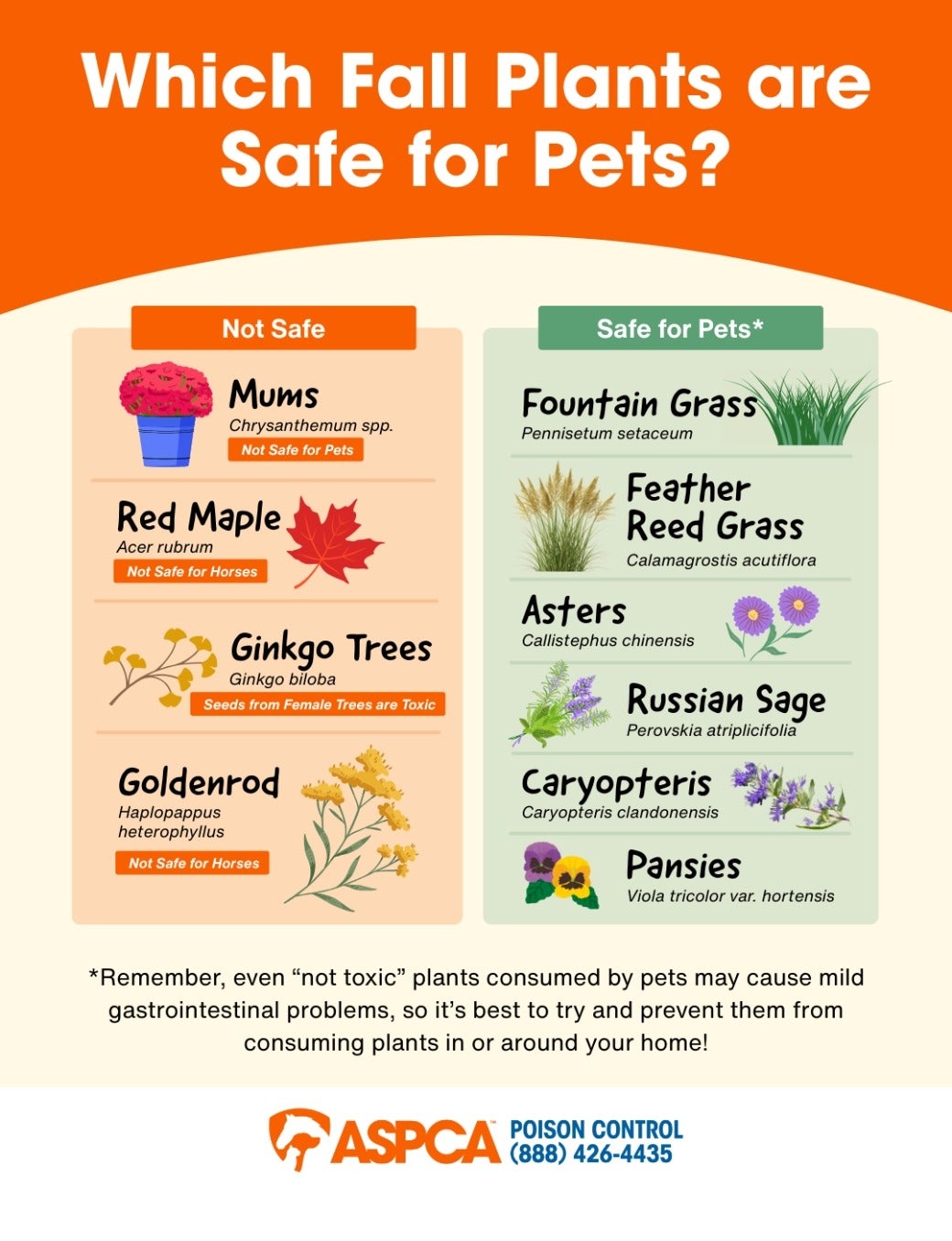
1. Mums (Chrysanthemum spp.) are certainly the most popular fall flower, but they are considered toxic to dogs, cats and horses. If ingested, symptoms can include vomiting, diarrhea and hypersalivation.
2. Red Maple (Acer rubrum) trees are beautifully vibrant during fall and are considered non-toxic to dogs and cats. However, these tree leaves are toxic to horses — especially when wilted. If consumed, symptoms can include anemia, weakness, dark urine, difficulty breathing, abortion and possibly death.
3. Ginkgo Trees (Ginkgo biloba) produce gorgeous yellow foliage in the fall, but it’s important to know that there is a difference between male and female ginkgo trees. Males are considered non-toxic to pets, but the female trees have seeds that contain ginkgotoxin which is considered toxic to pets. If ingested, there is a potential for vomiting, irritability and seizures. The easiest way to tell the male and female trees apart is by the fruit. The female tree’s fruit carries an incredibly unpleasant smell, which would also be nasty if your pet decided to roll in it!
4. Rayless Goldenrod (Isocoma pluriflora) is toxic to horses. Horses eating just 1-2% of their body weight in the plant can have potentially deadly effects. Onset of signs can occur after two days or up to three weeks and includes: incoordination, muscle weakness and tremors, elevated heart rate, heart arrhythmias, heart failure and constipation.
1. Fountain Grasses (Pennisetum setaceum) are beautiful in bloom and are considered non-toxic to pets.
2. ‘Karl Foerster’ Feather Reed Grass (Calamagrostis acutiflora) is great to grow in your yard and non-toxic to pets. Like other grasses, rarely grass awns can migrate in body tissues and cause mechanical injury so it's best to avoid exposure.
3. Asters (Callistephus chinensis) are typically sold around the same time as mums, but unlike mums, these plants are considered non-toxic to dogs, cats and horses.
4. Russian Sage (Perovskia atriplicifolia) is a purple plant that is considered non-toxic to pets.
5. Caryopteris (Caryopteris clandonenis), another purple plant, is considered non-toxic to pets so feel free to add it into your garden this fall!
6. Pansies (Viola tricolor var. hortensis) are also considered non-toxic to pets and can even live through a little frost! Add these pet-safe plants to bring gorgeous fall colors to your yard.
While considered “non-toxic,” all plant material consumed by pets may cause mild gastrointestinal problems, so it’s best to try and prevent them from consuming plants in or around your home. You can see ASPCA Poison Control's full list of toxic plants for more information.
If you suspect your pet has been exposed to any poisonous substances or potentially toxic plants, contact your veterinarian or call ASPCA Poison Control at (888) 426-4435 immediately.