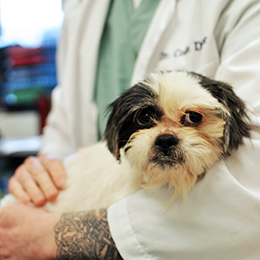
Urinary incontinence occurs when a housetrained dog loses control of his bladder. This can range in severity from occasional small urine leaks to inadvertent voiding of a large amount of urine.
Dripping urine, which can irritate the skin and cause redness, is one of the most recognizable symptoms of incontinence, as is excessive licking of the vulva or penis area. Pet parents may also notice area where the dog sleeps.
Consult with a veterinarian, who will confirm the diagnosis and try to determine a cause. The vet will take a thorough history, perform a physical exam and likely conduct a urinalysis to verify whether your dog is suffering from a bladder infection, which requires treatment with antibiotics. Other tests may include a urine culture, blood work, radiographs and ultrasound.
Some bouts of urinary incontinence ebb and wane, but others can progress and cause more serious bladder and kidney infections. A skin infection may result in areas that are in constant contact with urine.
Although urinary incontinence can afflict dogs of any age, breed or gender, it is most often seen in middle-aged to older spayed females; cocker spaniels, springer spaniels, Doberman pinschers and Old English sheepdogs are among the breeds often prone to incontinence.
Treatment for incontinence will depend on its underlying cause. Medications can often effectively manage this condition and prevent everyday accidents. Some treatments focus on hormone therapy, while others, such as Propolin, strengthen the bladder muscles that control urine flow. Surgery also may be an option if medication alone doesn’t work. Collagen injections, a newer therapy for incontinence, appear to have promising results.
In cases of incontinence due to bladder stones, a protruding disc or congenital abnormality, surgery may be recommended.