
Blindness in cats is a partial or total loss of vision that can be present from birth or occur suddenly due to injury or illness, or gradually from old age or progressive diseases such as hypertension, cataracts or glaucoma.
Since cats usually compensate and adapt successfully, a gradual loss of vision can be difficult to detect. Sudden loss of vision may cause more obvious signs. Here are a few signs that your pet’s vision may be failing:
Though blindness can be a congenital condition or part of the aging process, there are many conditions that can lead to vision loss in cats:
Cats of any breed and age can become blind. However, certain diseases that cause blindness are more commonly seen in elderly cats. Bengal, Abyssinian and Persian cats are genetically predisposed to retinal atrophy.
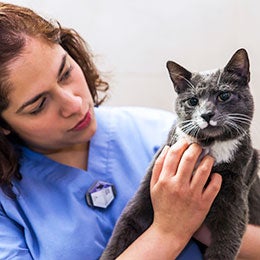
Your vet will perform a preliminary exam of your cat may run diagnostic tests such as blood work and blood pressure measurement. If necessary, your vet will recommend a veterinary ophthalmologist who will perform a more detailed assessment.
You can help your cat feel secure in his surroundings by providing a stable, obstacle-free environment. Most cats can adapt very well with their other senses.
Loss of vision in cats can be reversible, depending on the cause. Cataracts, which cause mild to total vision loss, can be removed by surgery. Check with your veterinarian to find the most appropriate treatment for your cat’s condition.
Pet parents should not let eye infections go untreated and any signs of diabetes, although a rare cause of blindness in cats, should be investigated. Examine your cat’s eyes regularly, and take him to the vet if his eyes look cloudy or if you see any changes in his overall activity or attitude. A regular visit to the veterinarian, even if no problems are noted, can help to detect any early problems and keep your cat in the best of health.